Stanley Sujith Nelavala
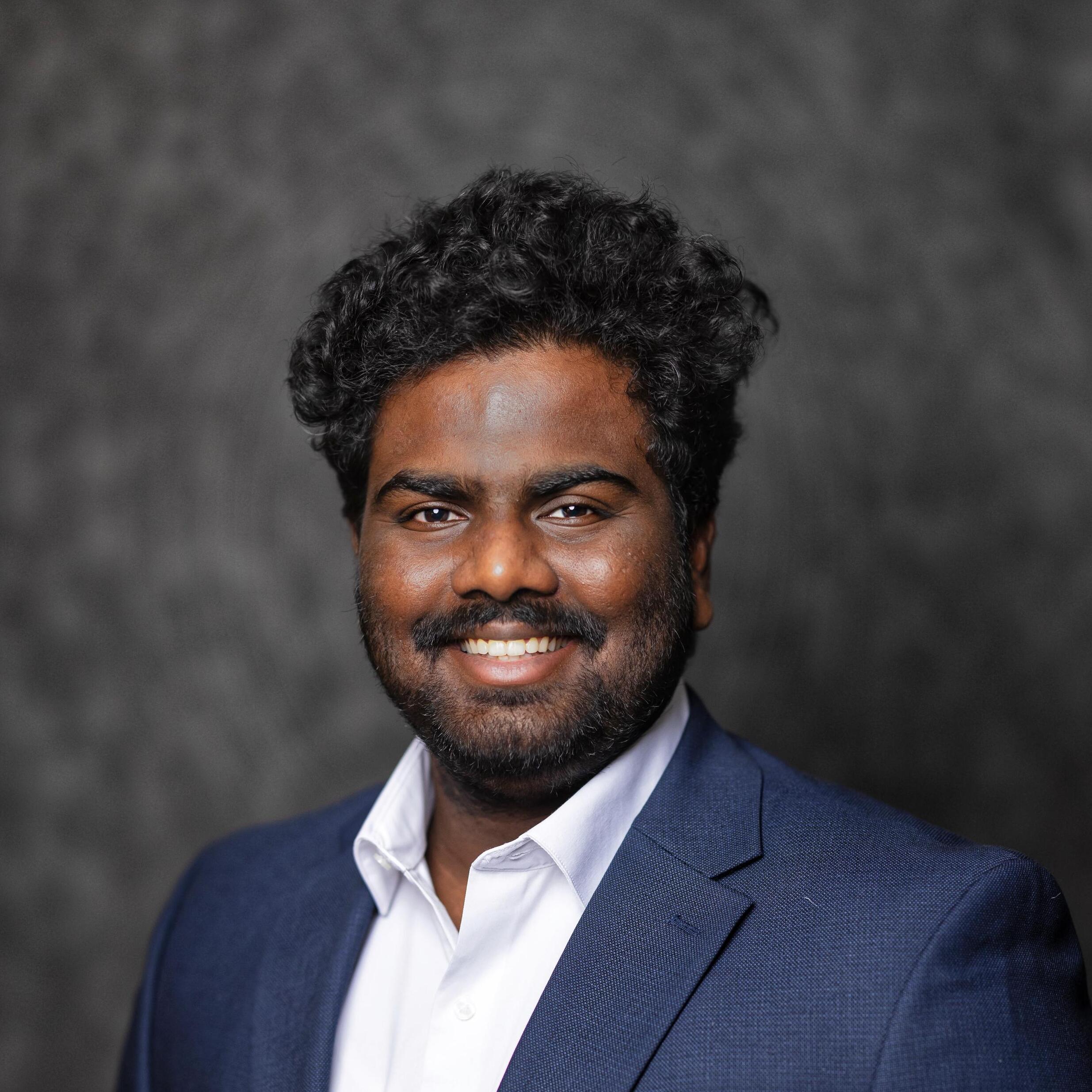
“If you are fortunate, it is better to build a longer table than a taller fence”
Latest CV
I update my CV regularly to reflect my latest research, projects, and academic commitments. If you’d like a deeper understanding of my work and interests, I encourage you to take a look. it offers the most complete picture of what I do and what I care about.
About Me
I’m Stanley Sujith Nelavala, a recent graduate of the M.S. in Computer Science (Research Track) program at the University of Minnesota Duluth, where I completed my degree with a 4.0/4.0 GPA. I hold a Bachelor's degree in Computer Science from IIIT D&M Kancheepuram in Chennai, India.
I plan to pursue a Ph.D. in Computer Science in the upcoming Spring/Fall application cycles. Until then, I am seeking opportunities to apply my skills, broaden my research experience, and contribute to impactful projects in both academic and industry settings. Broadly, my goal is to contribute to the design of AI systems that are not only technically robust, but also socially inclusive and cognitively supportive. My research interests lie at the intersection of Social Computing, Human Computer Interaction(HCI) and Artificial Intelligence(AI). I am particularly focused on studying how large language models (LLMs) can be developed to reflect and support diverse societal values, rather than converging toward a singular or monolithic perspective. I am also very interested in exploring how aligning LLMs with principles of human cognition: such as explanation, feedback, and decision support can help reduce cognitive load and enhance human problem-solving.
Over the past two years, I have investigated multimodal misinformation targeting marginalized communities, focusing on how it is perceived, its societal impact, and the factors influencing its spread. As part of this work, I designed and implemented an end-to-end data pipeline - collecting TikTok browsing histories from Trans and Non-Binary participants through secure web applications, integrating surveys via Prolific, and combining this data with large-scale automated scraping. The system managed over 1 million videos and 300,000 authors, enriched with multimodal features through GPU-accelerated frame extraction, OCR, and metadata harvesting. For analysis, I applied transformer-based topic modeling, clustering, and influence scoring to uncover misinformation themes and creator dynamics, and complemented these computational insights with a perception survey linking data to lived experiences. This project taught me how to work across messy modalities with intellectual honesty, connecting technical rigor to social impact.
I welcome connections—reach out to me on LinkedIn or via email to discuss projects, research, or career opportunities.
Skills
- Languages: Python, Java, C, C++, SQL, Dart, Swift
- Cloud & DevOps: AWS (EC2, S3, RDS, Load Balancer, IAM, Route 53, API Gateway), Docker, Git, GitHub, Jira
- Web & Mobile: React.js, Flask, Node.js, Bootstrap, Flutter, Android Studio, Xcode, Google API
- Tools & Dev: VS Code, IntelliJ, CLion, PyCharm, Eclipse, JUnit, Figma, LaTeX, Pandas, Plotly, RStudio
Certifications

Research and Teaching Experience
-
Graduate Research Assistant, University of Minnesota Duluth (Dec 2024 – Aug 2025)
Comp4SoG Lab (Advisor: Dr. Md Momen Bhuiyan)
Project: Investigating Multi-Modal Misinformation on Transgender and Nonbinary (TGNB) Issues on TikTok- Developed secure web applications to gather TikTok browsing histories from TGNB participants; integrated survey workflows via Prolific with large-scale automated scraping.
- Engineered a relational MySQL schema to manage >1M videos and 300k+ authors, structured across metadata, statistics, and multimodal features.
- Implemented GPU-accelerated frame extraction (FFmpeg) and OCR (PaddleOCR) for text recognition and caption parsing.
- Built pipelines for systematic enrichment of author-level statistics (followers, engagement metrics, activity patterns).
- Applied advanced NLP/ML methods including BERTopic, K-Medoids clustering, and influence scoring to analyze misinformation themes, creator dynamics, and amplification networks.
- Designed and deployed a perception survey to connect computational insights with TGNB participants’ lived experiences.
- Parallel Programming (Fall 2024)
- Natural Language Processing (Spring 2024 – Fall 2024)
- Introductory Python Programming & CS I (Fall 2023 – Spring 2024)
- Developed a Python parser to transform Verilog HDL into Virtual Reconfigurable Code (VRC)
- Enabled downstream simulation, synthesis, and formal verification in FPGA‑style environments
- Analyzed the publicly available HFEA dataset to estimate IVF treatment success rates
- Identified key clinical factors influencing outcomes and built interpretable decision‑support models
- Uncovered data patterns and trends to inform patient‑centric recommendations
Projects
Investigating Multi‑Modal Misinformation on Transgender and Non‑Binary Issues - Masters Thesis (Aug 2023 – Aug 2025)
- Engineered an end-to-end multimodal data pipeline combining secure participant-facing web apps, Prolific integration, and automated TikTok scraping to collect >1M videos and 300k+ unique authors.
- Designed a relational MySQL schema for large-scale storage of video metadata, author statistics, and multimodal features with automated enrichment pipelines.
- Implemented GPU-accelerated frame extraction (FFmpeg) and OCR (PaddleOCR) for on-screen text and caption parsing, integrated with metadata harvesting.
- Developed NLP/ML workflows using transformer-based BERTopic, K-Medoids clustering, and influence scoring to model misinformation themes, creator dynamics, and amplification networks.
- Linked computational findings with participant perceptions via a survey study, connecting quantitative pipelines to lived experiences.
MarketPulseRT – Real-Time Stock Market Data Pipeline (Dec 2024 – Jan 2025)
- Developed a real-time data pipeline that streams and processes stock market data using Kafka and Python.
- Deployed Kafka producers/consumers on EC2, streamed to S3, and transformed using AWS Glue.
- Enabled real-time querying with Athena over the processed data.
- Designed a scalable architecture for ingesting and analyzing financial datasets.
Fine-Tuning LLaMA 2 on a Telugu Instruction Dataset (Feb 2025 – Mar 2025)
- Built a fine-tuning pipeline for LLaMA-2-7B-Chat using QLoRA on a Telugu instruction dataset in Google Colab.
- Used Hugging Face's
transformers,peft, andtrllibraries with LoRA for efficient fine-tuning. - Managed tokenization, training, and merged model deployment to Hugging Face Hub.
Bulldog‑On‑Board: University Transition Assistance App (Jan 2024 – May 2024)
- Created a Flutter-based mobile app to help incoming university students transition smoothly, with a hub for events, resources, and support.
- Integrated Firebase for real-time authentication, cloud storage, and personalized student dashboards.
- Designed an intuitive UI with Figma, featuring interactive maps, reminders, and onboarding tips.
Publications
- Saxena, R., Nelavala, S. S., & Saxena, R. (2023). MuscleDrive: A Proof of Concept Describing the Electromyographic Navigation of a Vehicle. 1, 107–117. Access the paper (PDF)